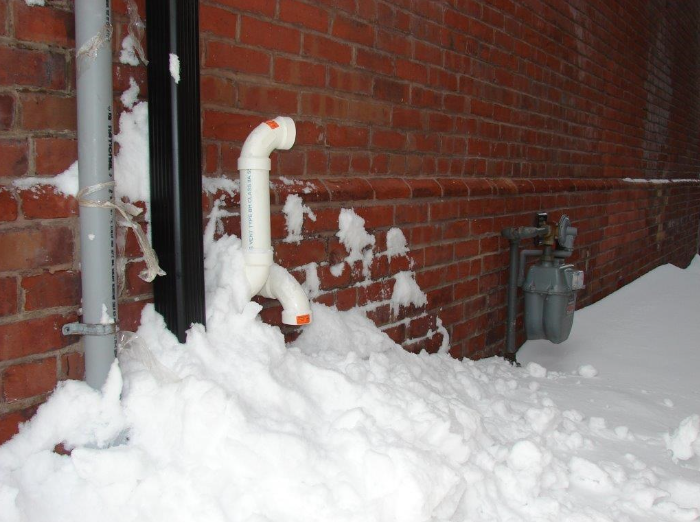
TORONTO, ON, January 26, 2026 - As major winter storm effects continue to impact parts of Ontario, the Technical Standards and Safety Authority (TSSA) urges homeowners and residents to check their gas meters and the external exhaust outlets for furnaces, fireplaces, water heaters and all fuel-burning devices to ensure no snow or ice builds up.
“Exhaust vents, in particular, often extend out of the side of a home as low as one foot above ground. They have the potential to get covered and blocked easily without a homeowner’s knowledge, especially when a homeowner is shoveling snow or using a snowblower or when there is a severe snow build-up,” says Owen Kennedy, TSSA’s Director of Fuels Safety. “Additionally, a snow-covered gas meter can interfere with its ability to regulate gas pressure, creating other serious safety risks,” adds Kennedy.
Blocked vents can increase the risk of carbon monoxide (CO) building up inside a home. CO, is a highly poisonous and deadly gas commonly referred to as the “Silent Killer” as you can’t smell it, see it or taste it. When snow piles up, check your gas meter and vents.
When snow piles up, check your gas meter and vents.
- Use a car brush or broom to gently remove snow from gas meters and vent pipes. Avoid sharp tools to prevent damage.
- Never shovel, plow, or blow snow against the meter or vent pipe.
- Be cautious when using snow blowers to avoid bumping the meter.
- Refrain from kicking the meter or vent pipes to clear ice or snow.
- Remove icicles from overhead eaves to prevent dripping water from freezing on the meter or vent pipes.
Also, for residents experiencing power-related issues it's important to remember to never use any fuel-burning appliances indoors that are specifically designed and approved for outdoor use only.
Be in the Know when it Comes to CO.
CO poisoning symptoms include dizziness, headaches, and nausea. If you're experiencing symptoms such as these, immediately move to fresh air and call emergency services.
Learn more about CO in this backgrounder, by visiting COsafety.ca by browsing through TSSA's WinterWise booklet for additional CO and winter safety tips.
About TSSA
Throughout Ontario, the Technical Standards and Safety Authority (TSSA) administrators provincial safety regulations and enhances public safety. TSSA regulates the safety of amusement devices, boilers and pressure vessels, elevating devices, operating engineers, and ski lifts. Its range of safety services includes public education, authorization, engineering design review, inspections, investigations, compliance support, enforcement, and prosecution activities.
For more information or to arrange media availability, please contact:
TSSA
Alexandra Campbell
Vice President, Communications, Stakeholder Relations
and Customer Service
Technical Standards and Safety Authority
Telephone: 416-734-2728
Email: media@tssa.org